
This framework is developed by a team of former McKinsey and Big 4 consultants. The presentation follows the headline-body-bumper slide format used by global consulting firms.
Editor Summary
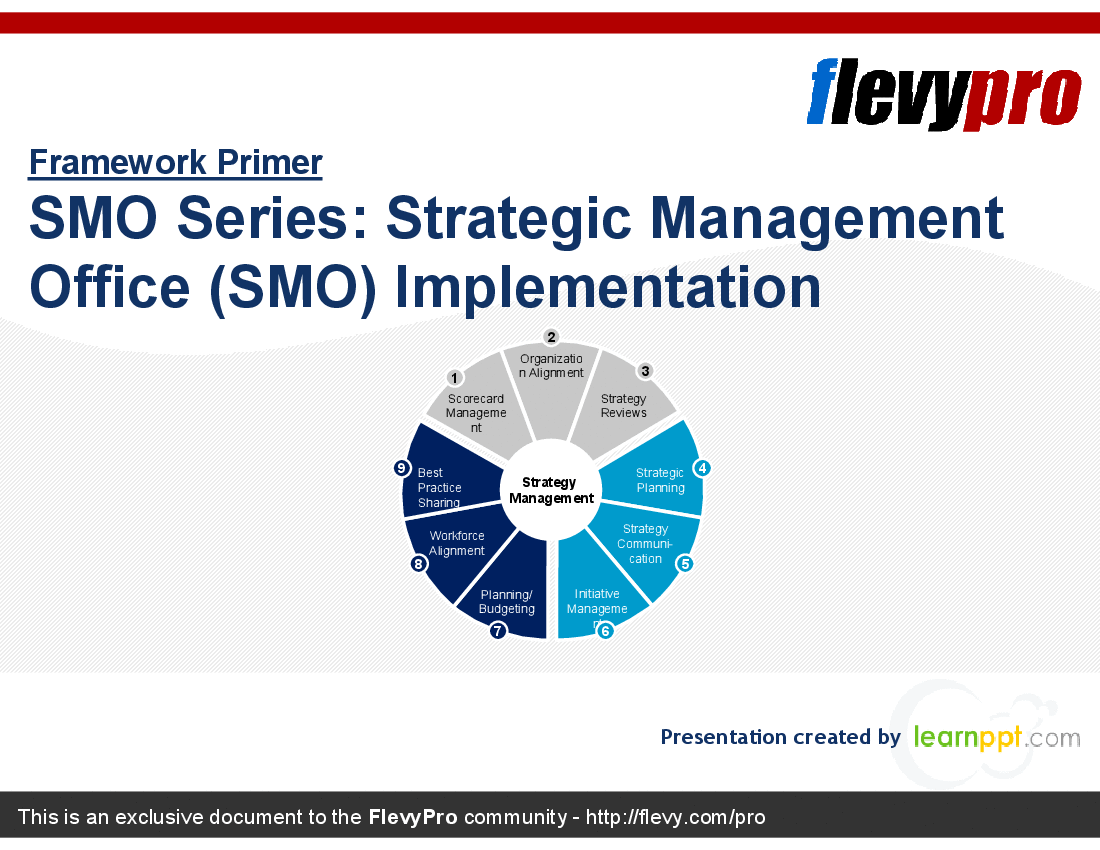
SMO Series: Strategic Management Office (SMO) Implementation is a 24-slide PowerPoint by LearnPPT Consulting that focuses on establishing a Strategy Management Office.
Read moreThe deck covers 4 common SMO organizational models, SMO resourcing needs, and a deep dive into resource allocation across the 9 key strategy management processes, illustrated by a Chrysler early‑2000s implementation case study. Intended users include strategy executives, PMO leads, management consultants, and corporate strategy teams; sold as a digital download on Flevy.
This deck is designed for situations where an organization needs to establish or strengthen a Strategic Management Office to address weak strategy execution, misalignment across business units, or unclear resourcing for strategic processes.
Chief Strategy Officers designing an SMO organizational model and building a resourcing plan tied to corporate strategy.
PMO or program leads mapping process ownership and assigning staff across the 9 SMO processes.
Management consultants developing an SMO implementation roadmap and using the Chrysler case study to illustrate resource allocation choices.
Business unit leaders integrating SMO processes into operational planning and review cycles.
The approach — defining models, clarifying roles, and allocating resources across 9 strategy management processes — reflects standard strategy execution practice.
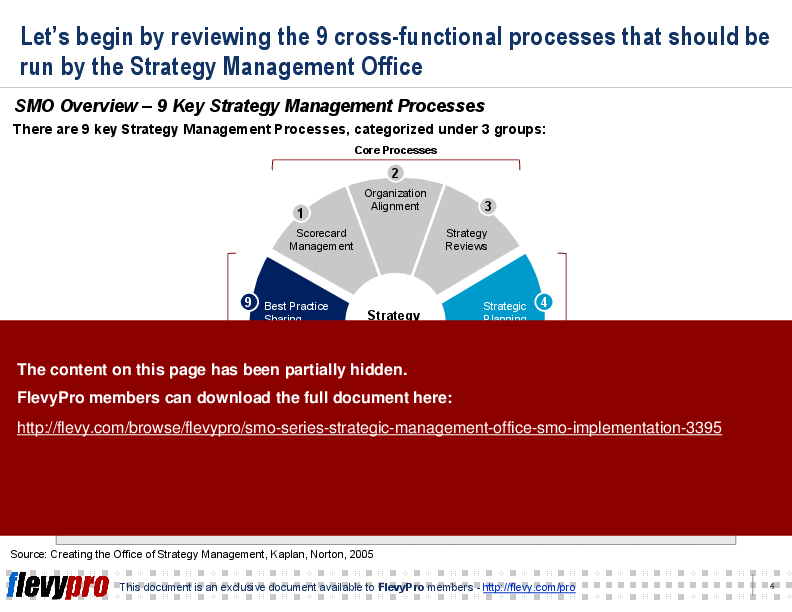
The Strategy Management Office (SMO), also referred sometimes as the Office of Strategy Management (OSM), is the team responsible for managing the Corporate Strategy of the organization.
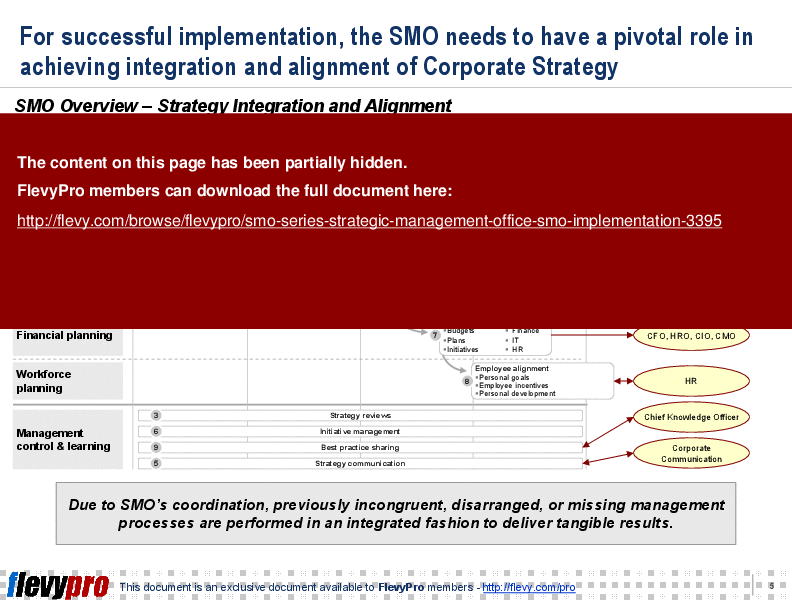
The ultimate role to execute Strategy lies with the line managers and employees, but without a core command and coordination office (i.e. the SMO), Strategy is either skipped from key processes or the processes are ineffectual across business units, causing poor Strategy execution.
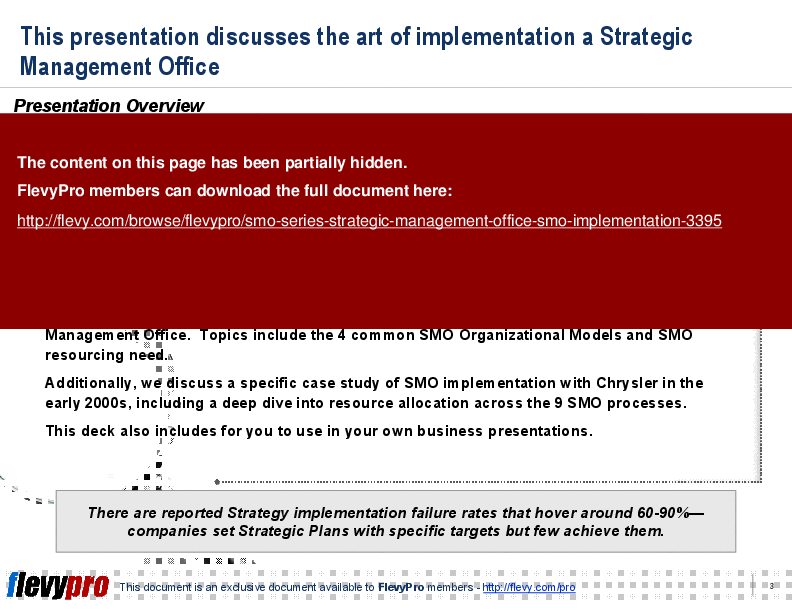
This presentation is the final in a series of 3. It covers the nuances of implementing a Strategic Management Office. Topics include the 4 common SMO Organizational Models and SMO resourcing need.
Additionally, we discuss a specific case study of SMO implementation with Chrysler in the early 2000s, including a deep dive into resource allocation across the 9 SMO processes.
This deck also includes for you to use in your own business presentations.
This PPT dives into the critical roles and responsibilities necessary for an effective SMO, including detailed breakdowns of the 9 key Strategy Management processes. It provides actionable insights into resource allocation, ensuring that each process is adequately supported by the right personnel. The presentation also outlines the importance of aligning all business units with the overarching strategy, emphasizing the need for cohesive integration across various functions.
The case study on Chrysler's SMO implementation offers a real-world example of how a well-structured SMO can drive significant business results. It highlights the steps taken by Chrysler to align their strategy with operational execution, detailing the specific roles and resources allocated to each strategic process. This comprehensive guide is essential for any organization looking to enhance their strategic management capabilities and achieve sustained success.
What is a Strategic Management Office (SMO) and what role does it play in strategy execution?
An SMO is a central command and coordination team responsible for managing corporate strategy and ensuring alignment across business units. It exists to prevent strategy from being skipped or ineffectively implemented by line managers, and to coordinate the 9 key strategy management processes described in the presentation, covering governance and resourcing across those 9 processes.
What are the common organizational models for an SMO and how do they differ?
Organizational models for an SMO vary by degree of centralization, reporting lines, and resourcing between corporate and business units. The deck outlines 4 common SMO organizational models and discusses how each model affects coordination, resourcing needs, and alignment across functions, noting differences across 4 model types.
What responsibilities and roles typically belong inside an SMO?
Typical SMO responsibilities include coordinating strategy processes, clarifying roles and accountabilities, tracking performance, and allocating resources to strategic activities. The presentation breaks down critical roles and responsibilities mapped to the 9 key strategy management processes to ensure each process has appropriate personnel and oversight across those 9 processes.
What should I look for when choosing an SMO implementation template or PPT?
Buyers should look for clear coverage of organizational models, role and responsibility definitions, concrete resource‑allocation guidance across strategy processes, and real-world examples. The SMO Series: Strategic Management Office (SMO) Implementation includes 4 organizational models, resourcing guidance, and a Chrysler case study across 24 slides as specific reference points.
How can I assess the value of purchasing an SMO implementation template versus building one in-house?
Value assessment can focus on time saved, clarity of model options, and reusable artifacts such as role breakdowns and resource allocation frameworks. The referenced deck provides a ready example set: 24 slides that present 4 SMO models, roles/responsibilities, and a detailed resource allocation discussion across 9 processes.
We have poor strategy execution across business units — what should be the first step toward an SMO?
First establish a core command and coordination function to ensure strategy is embedded in key processes, then select an SMO model, define roles and responsibilities, and map resourcing across the 9 strategy management processes. The presentation illustrates these steps and model choices with practical resourcing detail and 4 model options.
How should organizations decide resource allocation across SMO processes?
Resource allocation should match personnel and time to each process’s required activities and governance needs. The deck presents a deep dive into allocating resources across the 9 SMO processes and uses the Chrysler early‑2000s case study to show how specific functions were staffed and prioritized across those 9 processes.
What practical lessons can I expect from an SMO implementation case study like Chrysler’s?
A case study illustrates steps taken to align strategy with operational execution, concrete role assignments, and how resources were distributed across strategic processes. The Chrysler example in the presentation shows resource allocation choices and role breakdowns applied to the 9 key strategy management processes in an early‑2000s implementation.
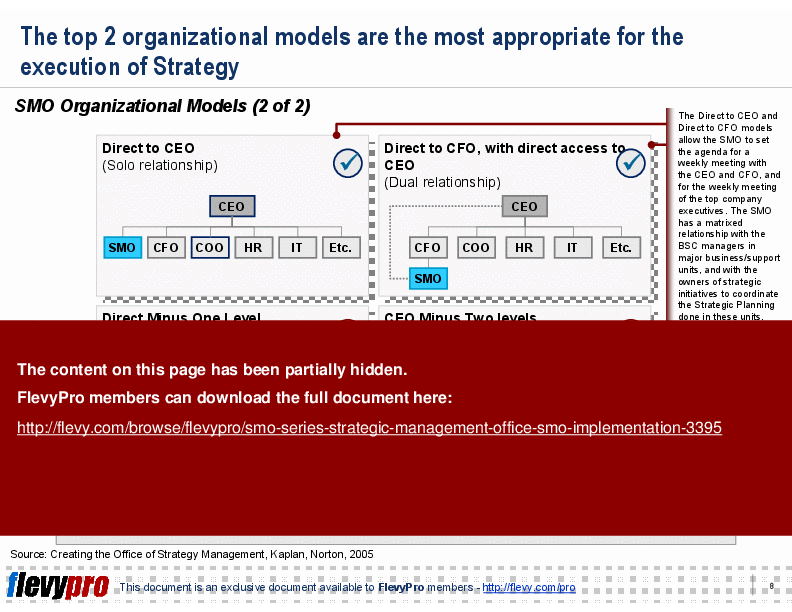
This PPT slide outlines 4 organizational models for implementing a Strategy Management Office (SMO). The "Direct to CEO" model provides immediate access to the CEO, promoting swift decision-making and alignment with strategic goals, making it optimal for agile strategy implementation. The "Direct to CFO (with direct access to CEO)" model positions the SMO within finance or strategic planning, allowing oversight while retaining CEO access, though it may slow responsiveness. The "Indirect to CEO (minus 1 level)" model limits direct access to the CEO, potentially hindering influence on strategic decisions. The "Indirect to CEO (minus 2 levels)" model further reduces influence and access. Ideally, the SMO should report directly to the CEO for effective strategy execution.
This PPT slide presents 2 effective organizational models for executing strategy: "Direct to CEO" and "Direct to CFO, with direct access to CEO." In the "Direct to CEO" model, the Strategic Management Office (SMO) reports directly to the CEO, enabling agenda-setting for key meetings and enhancing coordination with Balanced Scorecard (BSC) managers. The "Direct to CFO" model features the SMO reporting to the CFO while maintaining direct access to the CEO, facilitating strategic planning and execution through regular interactions. Conversely, the "Direct Minus One Level" model positions the SMO below the CFO or COO, limiting its influence on strategic initiatives. The "CEO Minus Two Levels" model further diminishes the SMO's role, relegating it to performance measurement without a central role in strategy discussions. Direct reporting relationships are crucial for the SMO's effectiveness in influencing strategy.
The Strategic Management Office (SMO) at Chrysler focuses on 3 key areas: Strategic Planning, Strategy Communication, and Initiative Management. In Strategic Planning, a senior manager and 3 managers engage in scenario planning to identify core challenges and prioritize strategic initiatives in the annual planning cycle. The Strategy Communication section highlights the SMO's role in creating Balanced Scorecards and strategy packs, collaborating with the corporate communications team to produce presentations and training resources. The SMO facilitates discussions in quarterly executive meetings and monthly strategy forums. In Initiative Management, 2 senior managers, 3 managers, and 2 analysts assess and guide strategic initiatives, while operational groups remain accountable for execution. This structured approach aligns strategic objectives with effective communication and initiative execution.
Source: Best Practices in Corporate Strategy, Strategic Management, Strategic Management Office PowerPoint Slides: SMO Series: Strategic Management Office (SMO) Implementation PowerPoint (PPT) Presentation Slide Deck, LearnPPT Consulting
This framework is developed by a team of former McKinsey and Big 4 consultants. The presentation follows the headline-body-bumper slide format used by global consulting firms.
For $10.00 more, you can download this document plus 2 more FlevyPro documents. That's just $13 each.
ABOUT FLEVYPRO
This document is part of the FlevyPro Library, a curated knowledge base of documents for our FlevyPro subscribers.
FlevyPro is a subscription service for on-demand business frameworks and analysis tools. FlevyPro subscribers receive access to an exclusive library of curated business documents—business framework primers, presentation templates, Lean Six Sigma tools, and more—among other exclusive benefits.
Since 2012, we have provided business templates to over 10,000 businesses and organizations of all sizes, from startups and small businesses to the Fortune 100, in over 130 countries.
Read Customer Testimonials
"If you are looking for great resources to save time with your business presentations, Flevy is truly a value-added resource. Flevy has done all the work for you and we will continue to utilize Flevy as a source to extract up-to-date information and data for our virtual and onsite presentations!"
– Debbi Saffo, President at The NiKhar Group
"As a young consulting firm, requests for input from clients vary and it's sometimes impossible to provide expert solutions across a broad spectrum of requirements. That was before I discovered Flevy.com.
Through subscription to this invaluable site of a plethora of topics that are key and crucial to consulting, I
have been able to exceed expectations and deliver quality advice and solutions to my clients. The quality and expertise of the authors are exemplary and gives me great confidence to use as part of my service offerings.
I highly recommend this company for any consultant wanting to apply international best practice standards in their service offerings.
"
– Nishi Singh, Strategist and MD at NSP Consultants
"Flevy is now a part of my business routine. I visit Flevy at least 3 times each month.
Flevy has become my preferred learning source, because what it provides is practical, current, and useful in this era where the business world is being rewritten.

many challenges and there is the need to make the right decisions in a short time, with so much scattered information, we are fortunate to have Flevy. Flevy investigates, selects, and puts at our disposal the best of the best to help us be successful in our work.
"
– Omar Hernán Montes Parra, CEO at Quantum SFE
"FlevyPro has been a brilliant resource for me, as an independent growth consultant, to access a vast knowledge bank of presentations to support my work with clients. In terms of RoI, the value I received from the very first presentation I downloaded paid for my subscription many times over! The
quality of the decks available allows me to punch way above my weight – it's like having the resources of a Big 4 consultancy at your fingertips at a microscopic fraction of the overhead.
"
– Roderick Cameron, Founding Partner at SGFE Ltd
"I like your product. I'm frequently designing PowerPoint presentations for my company and your product has given me so many great ideas on the use of charts, layouts, tools, and frameworks. I really think the templates are a valuable asset to the job."
– Roberto Fuentes Martinez, Senior Executive Director at Technology Transformation Advisory
"As a niche strategic consulting firm, Flevy and FlevyPro frameworks and documents are an on-going reference to help us structure our findings and recommendations to our clients as well as improve their clarity, strength, and visual power. For us, it is an invaluable resource to increase our impact and value."
– David Coloma, Consulting Area Manager at Cynertia Consulting
"My FlevyPro subscription provides me with the most popular frameworks and decks in demand in today’s market. They not only augment my existing consulting and coaching offerings and delivery, but also keep me abreast of the latest trends, inspire new products and service offerings for my practice, and educate me
in a fraction of the time and money of other solutions. I strongly recommend FlevyPro to any consultant serious about success.
"
– Bill Branson, Founder at Strategic Business Architects
"I have used Flevy services for a number of years and have never, ever been disappointed. As a matter of fact, David and his team continue, time after time, to impress me with their willingness to assist and in the real sense of the word. I have concluded in fact
that it is not at all just a repository of documents/resources but, in the way that David and his team manage the firm, it is like dealing with consultants always ready to assist, advise and direct you to what you really need, and they always get it right.
I am an international hospitality accomplished senior executive who has worked and lived during the past 35 years in 23 countries in 5 continents and I can humbly say that I know what customer service is, trust me.
Aside from the great and professional service that Flevy's team provide, their wide variety of material is of utmost great quality, professionally put together and most current.
Well done Flevy, keep up the great work and I look forward to continue working with you in the future and to recommend you to a variety of colleagues around the world.
"
– Roberto Pelliccia, Senior Executive in International Hospitality
Save with Bundles
This document is available as part of the following discounted bundle(s):
Download our free compilation of 50+ Strategy & Transformation slides and templates. Frameworks include McKinsey 7-S, Balanced Scorecard, Disruptive Innovation, BCG Curve, and many more.